Co-Living in the USA Under $750 a Month: Where New Immigrants Can Still Find a Room
A furnished room with bills included for under $750 a month is still possible in some US cities. Here's where, what it really costs and how to rent without credit.
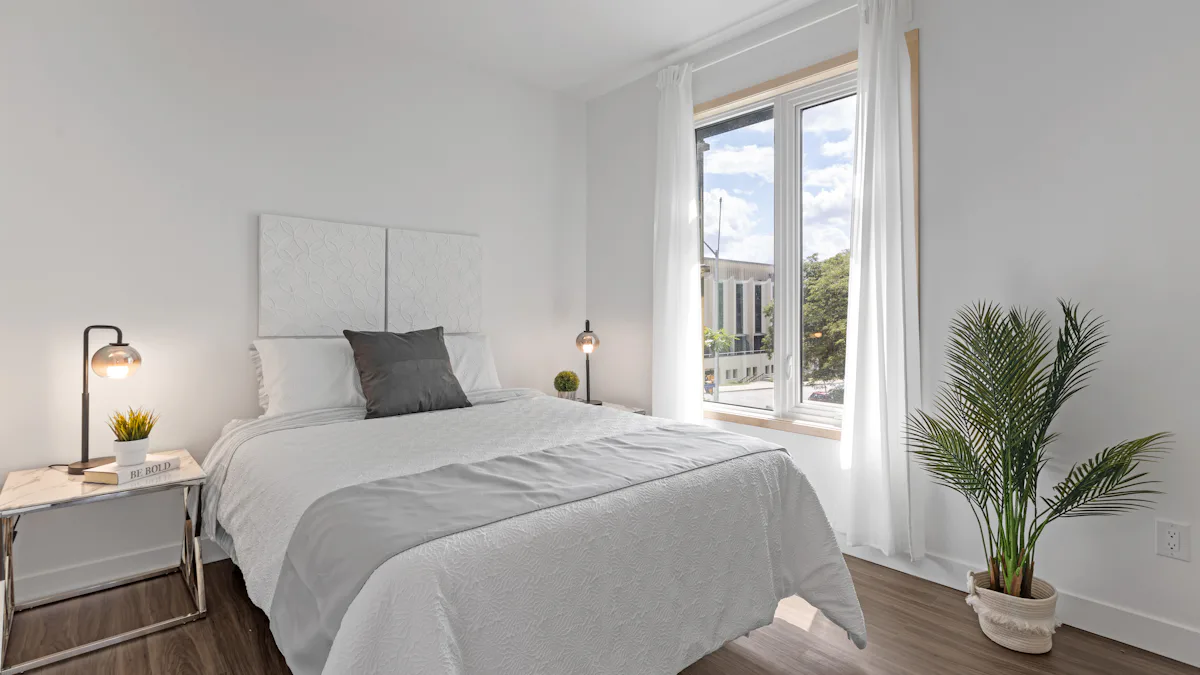
The median asking rent for a one-bedroom apartment in the US is around $1,500 a month. A new arrival with no American credit score, no Social Security number yet and no landlord reference will struggle to get one at any price. That is the gap co-living fills: you rent one furnished room, share the kitchen and living space, and pay one bill that usually covers electricity, water and Wi-Fi.
Under $750 a month is still realistic, but only in some cities and only for a room in a shared house. Large platforms list furnished rooms from roughly $130 to $180 a week in parts of Texas, Ohio and Missouri. In New York, Boston or San Francisco the same budget won't get you a private room.
This guide covers where the numbers still work, what rent includes, how to qualify without US credit, the full move-in cost, and the scams that target newcomers. All prices are in US dollars and change often, so treat them as a starting point and check live listings.
In this guide
- Co-Living Under $750 at a Glance
- What Co-Living Actually Means
- Why It Works for New Immigrants
- Cities Where Under $750 Is Still Possible
- Cities Where $750 Won't Stretch
- How to Work Out the Real Monthly Price
- Renting Without US Credit or a Social Security Number
- Your Real Budget for the First Month
- Rental Scams That Target Newcomers
- Frequently Asked Questions
- Before You Move
Co-Living Under $750 at a Glance
| Item | What to expect |
|---|---|
| What you rent | A furnished private room, sometimes a shared bedroom |
| Typical price in cheaper cities | About $130–$180 a week ($560–$780 a month) |
| Usually included | Furniture, utilities, Wi-Fi, laundry access |
| Credit check | Often none or flexible; ID and income check instead |
| Lease length | Weekly, monthly, or 3 to 12 months |
| Move-in cost | Often $100–$750, far less than an apartment |
| Best cities for this budget | Houston, San Antonio, Cleveland, Kansas City, Fort Worth |
| Hardest cities | New York, San Francisco, Boston, Los Angeles, Seattle, Washington DC |
What Co-Living Actually Means
Co-living is a simple idea with a fancy name: several unrelated adults live in the same house, each with their own bedroom, sharing the kitchen, bathroom or living room. It ranges from a homeowner renting out a spare room to companies that manage hundreds of furnished shared houses.
There are two very different products under the same label. Premium co-living buildings in big cities come with gyms, coworking space and social events, and often cost $1,200 to $2,000 a month. Budget co-living is a furnished room in an ordinary house with bills included. If your limit is $750, the second kind is what you're looking for.
| Co-living room | Traditional apartment | |
|---|---|---|
| What you rent | One bedroom | The whole unit |
| Furniture | Usually included | Usually not |
| Utilities and Wi-Fi | Often in the rent | Separate bills |
| Lease | Weekly to 12 months | Usually 12 months |
| Credit check | Often flexible | Usually strict |
| Move-in cost | Lower | First month, deposit, fees, furniture |
| Privacy | Less | Full |
Why It Works for New Immigrants
Most American landlords want three things a newcomer doesn't have yet: a credit score, a rental history and pay slips from a US job. Many also ask for income of three times the monthly rent. Co-living operators tend to check identity and income in other ways, and some accept an offer letter, bank statements or a few weeks paid upfront instead.
The other benefit is cash. Moving into an empty apartment means a deposit, the first month, furniture, a mattress, kitchen things and utility deposits, which can easily reach $3,000 to $5,000. A furnished room with bills included lets you start with one payment and keep your savings for emergencies while you look for work or wait for your first pay cheque.
Housemates help too. Someone who has lived in the city for a year can tell you which bus line works, where the cheaper groceries are and which employers are hiring.
Cities Where Under $750 Is Still Possible
These markets showed a good number of furnished rooms starting below $750 a month on large shared-housing platforms recently. Prices are starting points, not averages. The cheapest rooms tend to be smaller, farther out or with a shared bathroom.
| City | Typical starting room price | Getting around | Big employers of newcomers |
|---|---|---|---|
| Houston, TX | About $130/week | Car helps; buses and light rail in parts | Health care, energy, logistics, construction |
| San Antonio, TX | About $140/week | Bus network; car often needed | Health care, military-linked work, tourism |
| Kansas City, MO | About $145/week | Streetcar and buses in the centre | Warehousing, health care, manufacturing |
| Cleveland, OH | About $150/week | Rail and buses | Hospitals, manufacturing, universities |
| Fort Worth, TX | About $145–$155/week | Mostly car | Aviation, logistics, construction |
Houston
Houston has one of the largest supplies of cheap furnished rooms in the country, especially in areas like Alief, the east side and the north. It also has big African, Asian and Latin American communities, and a hospital district that hires constantly. The catch is size: if your room is an hour from work by bus, rideshares or a car will eat your savings.
San Antonio
Rooms near the lower end of the range exist, especially in houses with utilities included. Health care, the military bases and tourism provide a lot of entry-level work. Choose a room on a frequent VIA bus route, because many jobs are spread out.
Kansas City
Kansas City is a logistics and warehouse hub, so it suits people looking for steady shift work. Rooms in shared houses often start in the low $600s a month. The free streetcar covers downtown, but outer areas need a car.
Cleveland
Cleveland's hospitals, including some of the largest employers in Ohio, hire many immigrants. Rooms near rail or bus lines can stay under $750, and heat included in the rent matters a lot in a Cleveland winter. Check the exact street, because neighbourhoods change from block to block.
Fort Worth and Dallas
Fort Worth and the outer suburbs are much cheaper than central Dallas. Airport, warehouse and construction jobs are plentiful. You will almost certainly need a car, so add that to the real cost.
Cities Where $750 Won't Stretch
In New York, average room rents even in the Bronx are generally above $1,000. San Francisco, Boston, Seattle, Washington DC, Miami and central Los Angeles are similar or higher. If you're set on one of these cities, the realistic options are a shared bedroom, a room with family or friends, student housing through your school, or housing your employer arranges.
How to Work Out the Real Monthly Price
Weekly prices look small. Multiply by 52 and divide by 12, not by 4. A room at $150 a week is $650 a month, not $600, because most months are longer than four weeks.
Then add what isn't included:
| Cost | Ask about it | Typical range |
|---|---|---|
| Membership or platform fee | Some charge weekly or at move-in | $0–$100 |
| Move-in or holding fee | Instead of a deposit | $0–$300 |
| Utility cap | Extra charges if the house uses more | Varies |
| Laundry | Free or coin machines | $0–$30/month |
| Parking | Street or paid space | $0–$75/month |
| Renters insurance | Often required | $12–$25/month |
Renting Without US Credit or a Social Security Number
You can rent a room without a credit score, but you'll need to prove who you are and that you can pay. Have these ready as PDFs on your phone:
- Passport and visa, or your green card or work authorisation
- Job offer letter or employment contract, if you have one
- Last three months of bank statements from home or your new US account
- An I-20 or DS-2019 and proof of funding, for students
- A reference letter from a previous landlord, even abroad
If a landlord still wants more, offering two or three months upfront or finding a US-based guarantor can help. Don't hand over more than you can afford to lose to someone you haven't checked.
Start building credit straight away
Your credit file starts empty, and it decides the price of your next apartment, your car insurance and your phone plan. Once you have an SSN or ITIN, open a US bank account and get a secured credit card or a card designed for newcomers. Some card issuers can use your credit history from your home country. Put one bill on the card, pay it in full every month, and after six to twelve months you'll usually qualify for a regular apartment lease.
Your Real Budget for the First Month
| Item | Lean | Safer |
|---|---|---|
| First rent payment | $560 | $750 |
| Move-in or deposit | $0 | $750 |
| Application fee | $25 | $75 |
| Renters insurance | $12 | $25 |
| Phone SIM and plan | $30 | $60 |
| Groceries | $250 | $400 |
| Transport | $70 | $200 |
| Household basics | $80 | $250 |
| Emergency fund | $500 | $1,500 |
| Total | About $1,530 | About $4,010 |
Health insurance is the cost newcomers most often forget. A single emergency room visit can cost thousands. If your job doesn't include cover from day one, look at short-term or marketplace plans on HealthCare.gov, or student plans if you're studying.
Rental Scams That Target Newcomers
The FTC lists rental listing scams among the most common frauds in the US. Newcomers are targeted because they often rent from abroad.
- The price is far below everything nearby. A $400 private room in a pricey area is bait.
- The "landlord" is abroad and can't show the room. They ask you to wire a deposit and promise to mail the keys.
- They want payment by Zelle, gift cards, crypto or wire before you see it. Use a traceable method and get a receipt.
- No written agreement. Always get the rent, deposit, notice period and house rules in writing.
- The photos appear on another listing. Run a reverse image search before you pay anything.
Through a known platform, pay only inside the platform. With a private landlord, check public property records to confirm they own the house.
Frequently Asked Questions
Can I really rent a room in the US for under $750 a month?
Yes, in cities like Houston, San Antonio, Kansas City, Cleveland and Fort Worth, furnished rooms in shared houses often start between about $560 and $750 a month. In New York, San Francisco and Boston, it's very hard at that budget unless you share a bedroom.
Do I need a Social Security number to rent a co-living room?
Usually not. Many operators accept a passport and proof of income or funds instead. You'll need an SSN or ITIN later to build credit, open some bank accounts and file taxes.
Are utilities included in co-living rent?
Often, but not always. Many furnished-room providers include electricity, water and Wi-Fi, sometimes with a monthly cap. Ask for the exact list in writing, and ask about laundry and parking.
Is co-living safe for new immigrants?
It can be, if you use a reputable provider or check a private landlord. Insist on a lock on your bedroom door, read the house rules and look up the neighbourhood and bus routes for the exact address. Never pay before you've confirmed the listing is real.
How long should I stay in co-living?
Many newcomers stay three to twelve months. That's long enough to get a job, open a bank account, build some credit and learn the city before signing an apartment lease.
Should I get renters insurance for a room?
Yes. It usually costs $12 to $25 a month and covers your belongings against theft or fire, plus liability if you damage the house. Some co-living providers require it.
Before You Move
- Pick two or three cities where your type of work is hiring, and compare room prices there.
- Map each room to your likely workplace and the nearest bus or rail line before you choose.
- Work out the real monthly price, including fees, transport and health insurance.
- Keep at least one month of rent as an emergency fund on top of your move-in money.
If you're still looking for work, see our guides to H-2B construction jobs in the USA and EB-3 visa sponsorship. For more on everyday costs, read the cheapest US states for immigrants.
Disclaimer: This guide is general information, not legal or immigration advice. Fees, quotas and requirements change often, so confirm every detail on the official government website before you apply or pay anyone. See our editorial policy.